Complete Beginners Welcome

Write beautifully.
Learn at your own pace.

Twelve video lessons. Three hand styles. A workbook mailed to your door. Personal written feedback on every practice submission.

12 Video Lessons
Printed Workbook
Written Feedback
What This Course Is

Calligraphy taught the way it should be — hands on, unhurried, and deeply personal.

Zenohe Heyixe is a self-paced online calligraphy program designed from the ground up for people who have never held a dip pen or brush before. The course delivers twelve pre-recorded video lessons across three distinct hand styles: Copperplate script, Italic hand, and Gothic Blackletter. Each lesson runs approximately twenty minutes, which means you can finish a complete unit during a lunch break or a quiet weekend morning without feeling rushed.

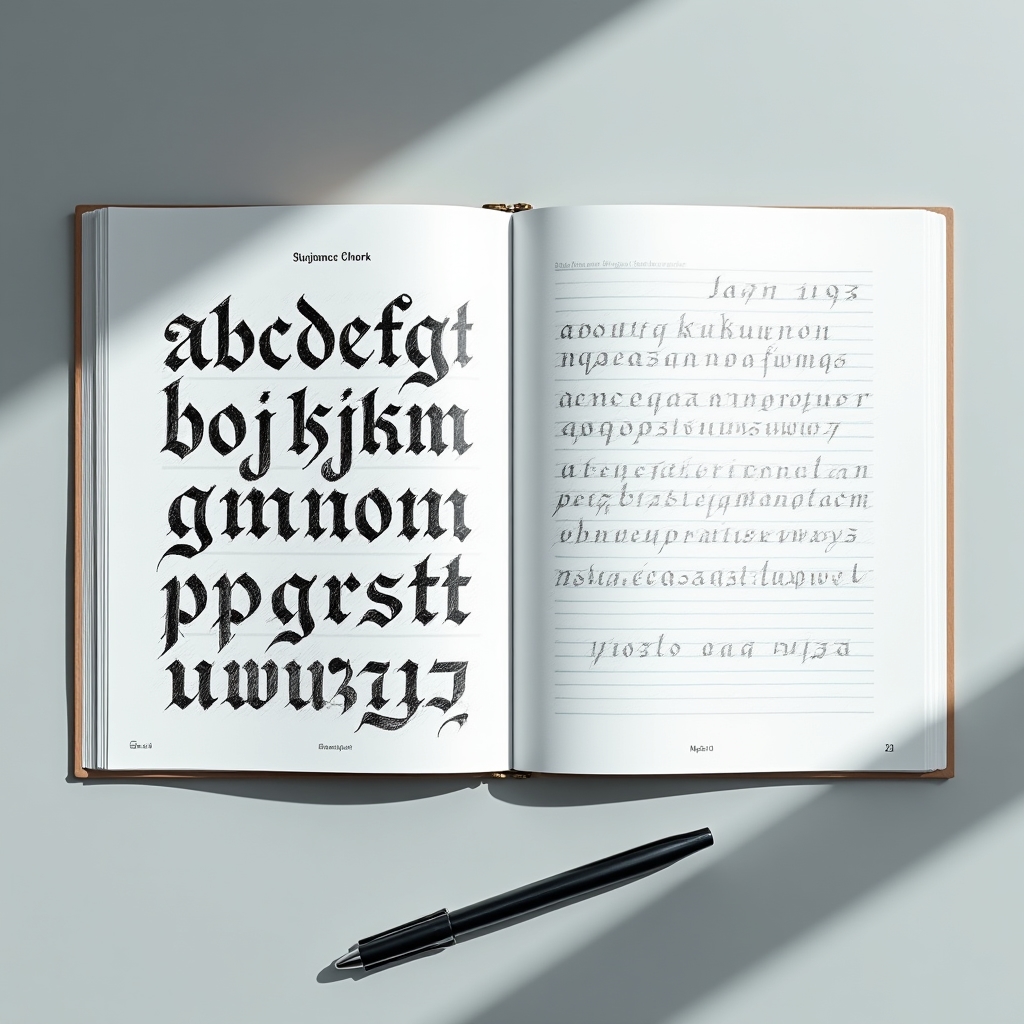
When you enroll, a printed workbook ships directly to your address. It contains traced letterform guides, blank practice grids calibrated to each hand style, and reference pages you can return to whenever a particular stroke needs revisiting. The physical workbook exists because learning calligraphy is a tactile process — watching a screen is only half the equation.

Explore the curriculum

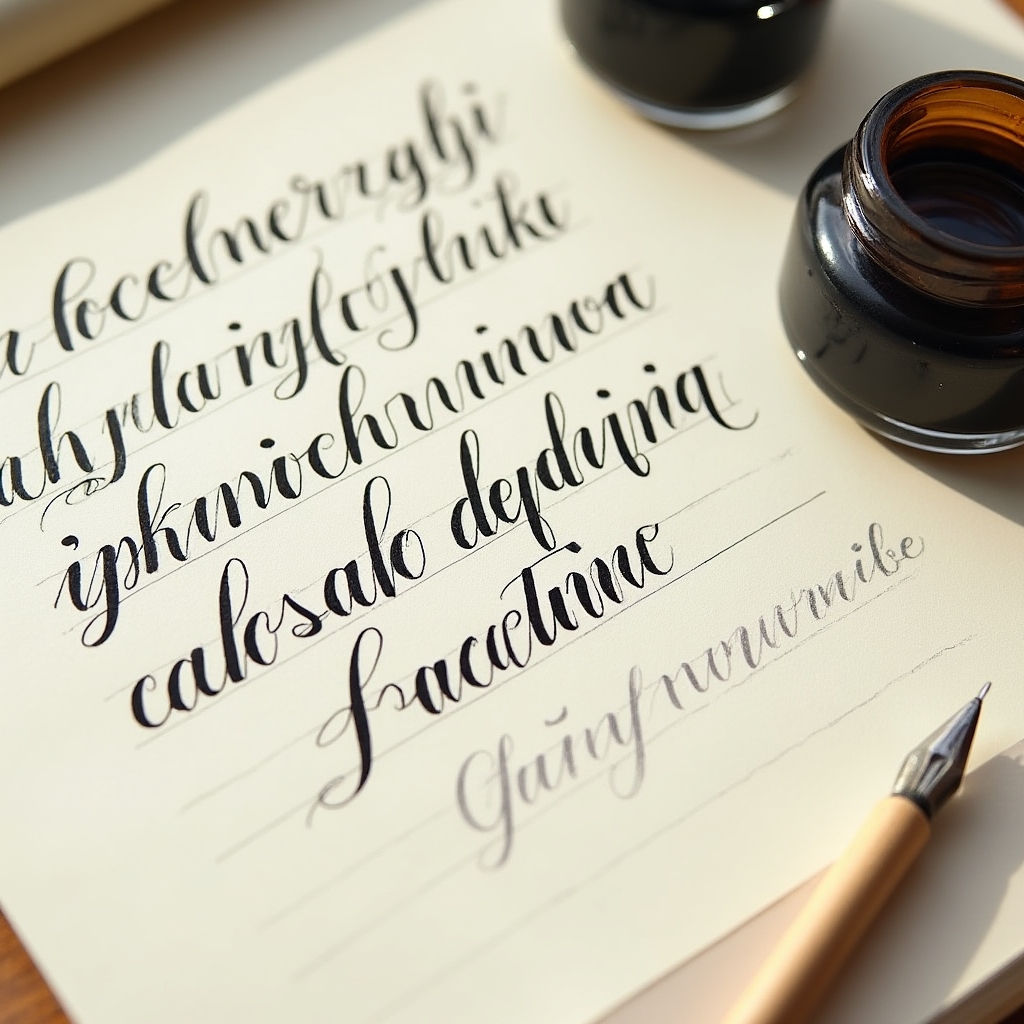
Calligraphy desk with dip pen, ink, and practice paper laid out neatly
The Curriculum

Three hand styles. One cohesive journey.

Each style builds on the muscle memory and observation skills developed in the previous one, creating a cumulative learning arc across all twelve lessons.

Copperplate Script

Lessons 1 through 4 introduce the fundamental principles of pressure-and-release writing with a pointed nib. You learn how hairline upstrokes and shaded downstrokes combine to create the flowing, oval-based letterforms that defined 18th-century penmanship. Copperplate rewards patience and develops fine motor awareness that benefits every subsequent style in the course.

Lessons 1 – 4

Italic Hand

Lessons 5 through 8 shift to the broad-edge nib and the rhythmic, slanted letterforms of Renaissance Italic. This hand is arguably the most practical of the three for everyday use — many students find themselves writing birthday cards and envelope addresses in Italic long before the course concludes. The broad nib creates thick and thin strokes through angle alone, removing the pressure variable and offering a different kind of control challenge.

Lessons 5 – 8

Gothic Blackletter

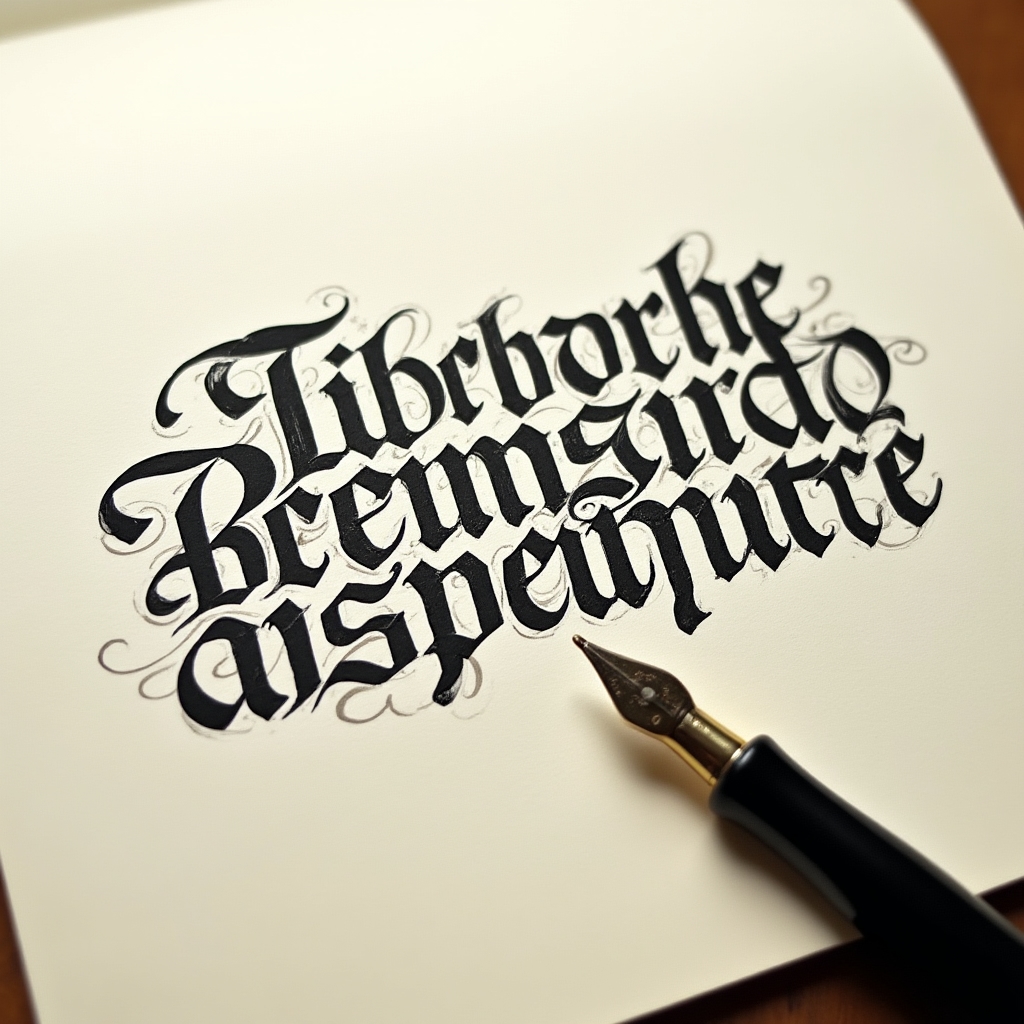
Lessons 9 through 12 cover the dense, architectural letterforms of Gothic Blackletter. This style demands precision and spatial awareness — each letter is constructed from a set of repeating diamond-tipped strokes that must align with near-mechanical consistency. Students who reach this section often describe it as the most visually dramatic and satisfying of the three, particularly when applied to titles, monograms, or decorative text.

Lessons 9 – 12
How It Works

From enrollment to finished letterforms in four clear steps.

01

Enroll Online

Choose a course package on the Pricing page, complete your enrollment, and enter your mailing address for workbook delivery. The entire process takes under five minutes.

02

Receive Your Workbook

A printed workbook ships to your address within a few business days of enrollment. It contains practice grids, letterform tracings, and reference charts for all three hand styles covered in the course.

03

Watch & Practice

Access all twelve video lessons immediately after enrollment. Each lesson is approximately twenty minutes long. Watch, pause, rewind, and practice at whatever pace fits your schedule — there are no deadlines or expiration dates on your access.

04

Submit & Receive Feedback

Photograph your completed practice pages and submit them through the course portal. You receive detailed written feedback addressing specific aspects of your letterforms, stroke weight, spacing, and angle consistency.

Printed calligraphy workbook open showing practice grids and letterform guides
The Printed Workbook

A physical companion that lives on your desk.

The workbook was designed specifically to accompany the video lessons rather than simply repeat them. Each section opens with a reference spread showing the full alphabet in the relevant hand style, followed by structured practice grids where letter heights, slant angles, and baseline distances are already printed. This removes a significant barrier for beginners — you don't need to set up your own guide sheets before you can start practicing.

Beyond the letterform grids, the workbook includes dedicated pages for connecting letters into words, practicing common letter combinations that students typically find difficult, and composing short practice phrases that appear in the corresponding video lesson. The workbook is yours permanently, meaning you can return to it long after completing the twelve lessons as a reference and warm-up tool.

Laptop screen showing a calligraphy video lesson with instructor demonstrating pen technique close-up
The Video Lessons

Filmed to show exactly what your hand needs to do.

Each of the twelve video lessons was filmed with multiple camera angles — an overhead view of the writing surface, a close-up of the nib contact point, and a wider shot showing the full arm position and posture. This multi-angle approach addresses one of the most common frustrations in learning calligraphy from video: not being able to see the pen tip clearly enough to understand what is actually happening at the moment of ink transfer.

The videos are pre-recorded, which means you can pause mid-stroke, rewind to watch a particular letterform constructed again, and slow down any segment where the technique requires closer observation. There is no live session scheduling, no timezone coordination, and no pressure to keep up with a class. Your access does not expire, so you can revisit earlier lessons as your skills develop and your eye becomes more discerning.

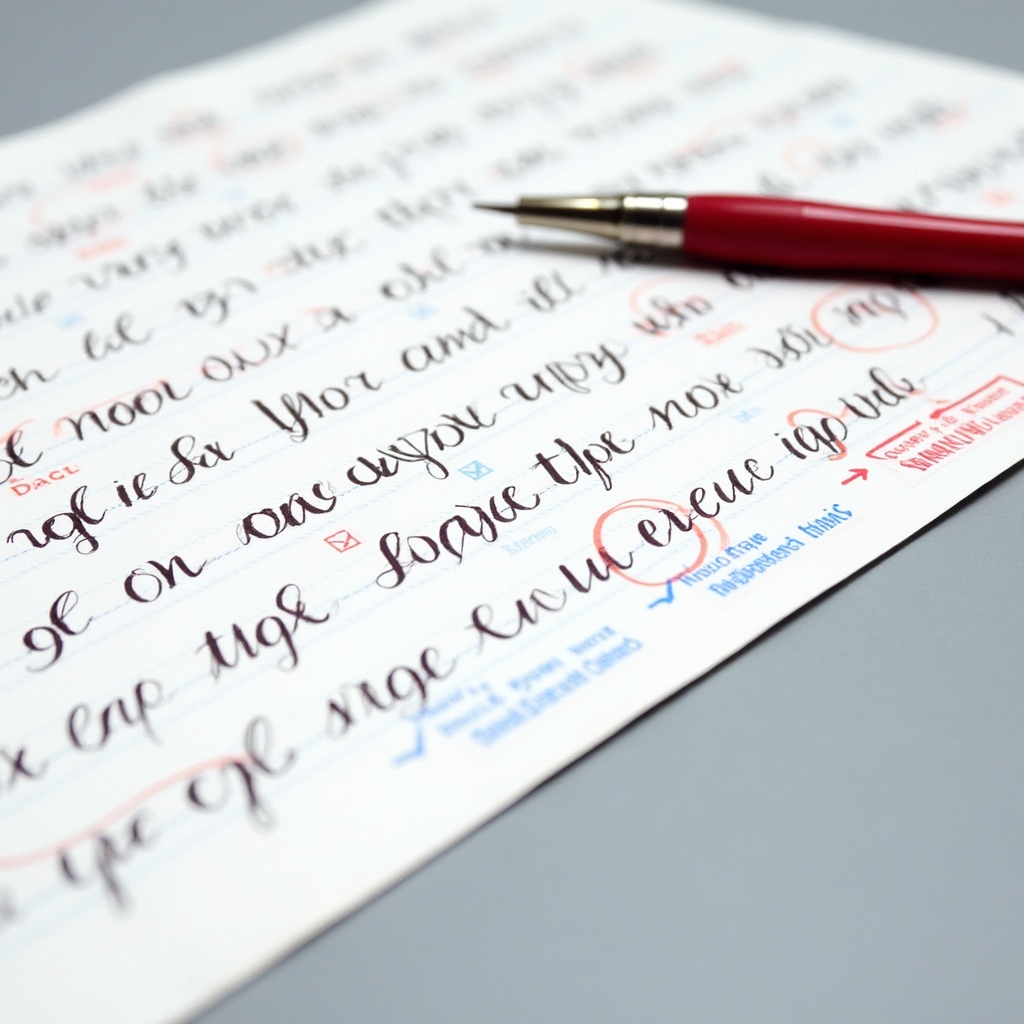
Close-up of handwritten instructor feedback notes on printed calligraphy practice sheet with annotations
Written Feedback

Your practice, reviewed with specific attention.

Submitting practice photos for feedback is optional but strongly encouraged for students who want to identify specific areas for improvement. When you photograph your practice pages and upload them through the course portal, you receive written feedback that addresses observable aspects of your work: stroke consistency, entry and exit angles, letter spacing, ink flow, and overall rhythm. The feedback is written rather than recorded so that you can refer back to individual points as you continue practicing.

The feedback process is designed to be constructive and specific rather than generic. Rather than broad observations, the written responses point to particular letters or passages within your submitted pages and explain what is working and what adjustment might improve the result. Students can submit practice photos at any point during the course, not just at defined checkpoints.

Ready to pick up a pen?

Enrollment takes minutes. Your workbook ships shortly after. The twelve lessons are waiting whenever you are.

Common Questions

Things people ask before enrolling.

Ask your own question
Do I need any prior experience with calligraphy or drawing?

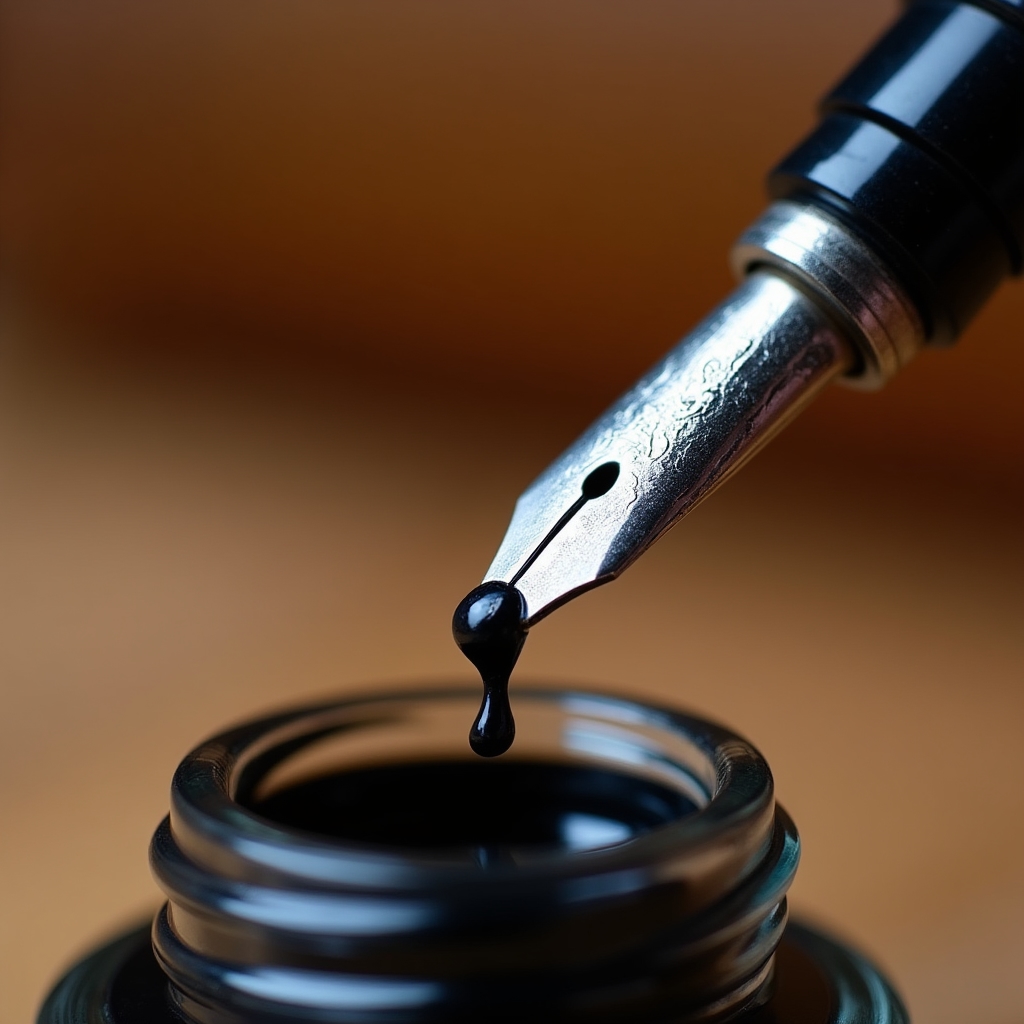
No prior experience is needed. The course is designed specifically for complete beginners. Lesson 1 starts with how to hold the pen correctly and how to load a nib with ink — foundational steps that assume no previous knowledge.

What tools and materials do I need beyond the workbook?

You'll need a basic calligraphy starter set: a pen holder, a pointed nib and a broad-edge nib, black calligraphy ink, and smooth practice paper. Lesson 1 includes a detailed overview of recommended tools at different price points. The workbook itself provides all the practice surfaces you need for the structured exercises.

How long do I have access to the video lessons?

Access does not expire. Once you enroll, the twelve video lessons are available to you indefinitely. You can work through them over a few weeks or return to individual lessons months later as your practice deepens.

Is the feedback included in the course price?

Written feedback on submitted practice photos is included in the standard enrollment. There is no separate charge for submitting your practice work. You can submit photos at any point during your course journey.